1

 1 minuto de lectura'
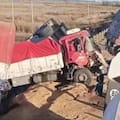
KOBANI, Syria (AP) — Hundreds of oil tanker trucks were stranded in northeastern Syria's Kurdish region Wednesday after demonstrators blocked a major highway near the town of Tal Tamr in protest over rising fuel prices.
It was the latest evidence of rising discontent in the Kurdish region in the midst of a push to integrate a once-powerful Kurd-led force into Syria’s army and bring formerly autonomous institutions under the control of the central government.
The integration agreement with the Syrian Democratic Forces has been widely regarded as a victory for the government of interim President Ahmad al-Sharaa.
But in recent weeks, a series of issues have sparked discontent among Kurdish communities in formerly SDF-controlled areas, testing al-Sharaa's ability to consolidate his rule and bring unity to a country emerging from 14 years of conflict.
Kurds, who made up about 10% of Syria’s population of 23 million before the country’s civil war began in 2011, were long marginalized under the country's then-ruling Assad dynasty. During the war, they carved out a de facto autonomous zone in the northeast.
With the new post-war government now reasserting control over the northeast, Kurdish communities are anxious about losing the rights they had under self-rule.
Students in the cities of Qamishli and Hassakeh have staged mass protests in recent weeks over a government decree that makes Kurdish an official language of instruction for the first time in Syrian history, but only provides for three classes a week in the language.
Under the rule of former Syrian President Bashar Assad, the Kurdish language was banned in schools. But during the war, SDF-affiliated authorities in the northeast set up a school system teaching mostly in Kurdish.
Anger rose further after a Kurdish former SDF fighter who had joined the Syrian army as part of the integration agreement between the SDF leadership and Damascus was abducted and killed by a group of Arab men in Hassakeh earlier this month.
Then prisoners rioted in a jail in the Kurdish-majority city of Kobani, igniting a fire that killed nine detainees. Former SDF commander Mazloum Abdi, now an advisor to al-Sharaa, traveled to the city to attend the funeral and attempted to defuse the anger.
"There is an outburst of tension among the people here,” Masoud Bouzi, a resident of Kobani, said as shops around the city shuttered as part of a day of mourning on Sunday. “This discontent will have a negative impact on the ongoing process here, the integration process — and it already has.”
On Sunday, the government hiked gasoline prices by about 30% and diesel by 40%, citing rising global fuel prices due to the U.S.-Iran war and repair work at the Baniyas refinery on the country’s coast.
Protests broke out in several areas, including in the northeast, where residents were already feeling the pinch of increased fuel prices. When northeast Syria — including its oil fields — was under the SDF’s control, fuel was heavily subsidized. After the central government took control, removing those subsidies shocked people there, even before the most recent price hike.
Demonstrators shut down the M4 highway near the town of Tal Tamr, blocking trucks bringing oil from the Qamishli and Rmeilan oil fields, and announced that they would only reopen the route if the price increases are reversed.
Noah Bonsey, senior adviser on Syria with the International Crisis Group, said the anger over fuel hikes has the potential to be “a real obstacle to the integration process."
“Among Kurds who are open to some of the benefits of integration, the rising cost of living undermines potential support,” Bonsey said. “Among opponents of integration, it’s just one more reason to object.”
Another point of dispute has been the fate of all-women fighting units of the now-dissolved SDF.
The Women’s Protection Units, or YPJ, played a significant role in the fight against the Islamic State militant group in northeast Syria. But the current military authorities in Damascus, most of whom came out of the Islamist former insurgent groups that overthrew Assad, are opposed to women in combat.
YPJ commander Nowruz Ahmad told The Associated Press that the group’s leaders had requested integration into the interior ministry’s security forces as a regiment within the special missions department.
“They said there are women inside the ministry and within General Security, and we would like to increase the number of them and we don’t have any issues with that,” she said. “But it can’t be within the special mission forces.”
Ahmad said the YPJ had also requested to remain in their current region of operation, in Hassakeh and Aleppo provinces and the government had been open to that request, but that details remained “under discussion.” The force currently has about 1,500 women enlisted, down from 5,000 at its peak, she said.
“The important thing is to preserve the essence and the substance of this force for the protection of women, the protection of the movement, and for the protection of our region especially,” she said.
Interior Ministry officials declined to comment on the negotiations.
Bonsey said the tensions should not overshadow how far the two sides have come since January, when the integration deal reached between the central government in Damascus and the SDF halted weeks of fighting.
“For them to have both stepped back from that further brink, negotiated an integration deal that not only stopped the fighting, that they’ve actually moved on to gradually flesh out and implement, is itself quite an accomplishment," he said.
The agreement's implementation has “entailed compromises made by both sides - albeit tilted in favor of Damascus, which is the stronger party,” he said. “You have a challenging, but overall positive dynamic, and then obviously you have all these major obstacles on the ground."
—
Sewell reported from Beirut.