
1

 1 minuto de lectura'
Haiti suffered one of its heaviest defeats in recent years Saturday night, falling 6-0 to the United States in the first leg of the Concacaf Nations League quarterfinals. But inside Miami’s Nu Stadium, the score was far from the only story as fans brought music, politics and culture into the arena.
Haitian supporters, who nearly filled the 26,700-seat venue themselves, stood behind Les Grenadiers from kickoff to the final whistle. Even after the Americans pulled away with six goals, the crowd refused to let the defeat define the night.
Instead, they turned the stadium into a celebration of Haitian identity, music and solidarity, cheering every pass, tackle and save as if the game remained within reach. And when the match ended, their support continued, with fans singing and dancing to the rhythms of the Haitian street band Rara Lakay and DJ TonyMix animating.
“Beyond the scoreboard, we came here to support our Grenadiers, making them feel that we are with them no matter (whether things go) good or bad,” said Marc Hérold Jean, a Haitian American who traveled from Texas to attend the match.
At halftime, he told The Haitian Times that the team would turn it up to win the match.
“I know the team well,” he said.
“Ayiti li ye,” he said in Haitian Creole, meaning, “It’s Haiti.”
That sentiment captured the mood of the night. For many supporters, coming from across the U.S. and abroad.
For Menes Dejoie , a New York-based educator, the game was an opportunity to stand with his homeland’s national team, celebrate their heritage and demonstrate the bond between Haiti and its diaspora.
“We are the children of Jean-Jacques Dessalines, Charlemagne Péralte and Benoit Batraville,” Dejoie said before the game, referring to Haiti’s freedom fighters.
Haitian flags, blue-and-red jerseys and other national symbols dominated the stands. USMNT fans were easier to spot amid the large groups of Haitian fans. At one point, a security officer joked that the crowd had the “right colors but wrong team,” underscoring how thoroughly Haitian fans had taken over the stadium atmosphere despite the U.S. scoring for fans.
The celebrations also carried messages about the country’s struggles and hopes for a better future.
Fans repeatedly chanted “Debloke peyi a” or “Free the country,” expressing what has become a rallying cry from Haitian soccer players after they qualified Haiti for last summer’s World Cup. It’s a call for peace and an end to the insecurity gripping the nation. Others shouted “Bwa Kale,” invoking the vigilante movement that emerged in response to gang violence.
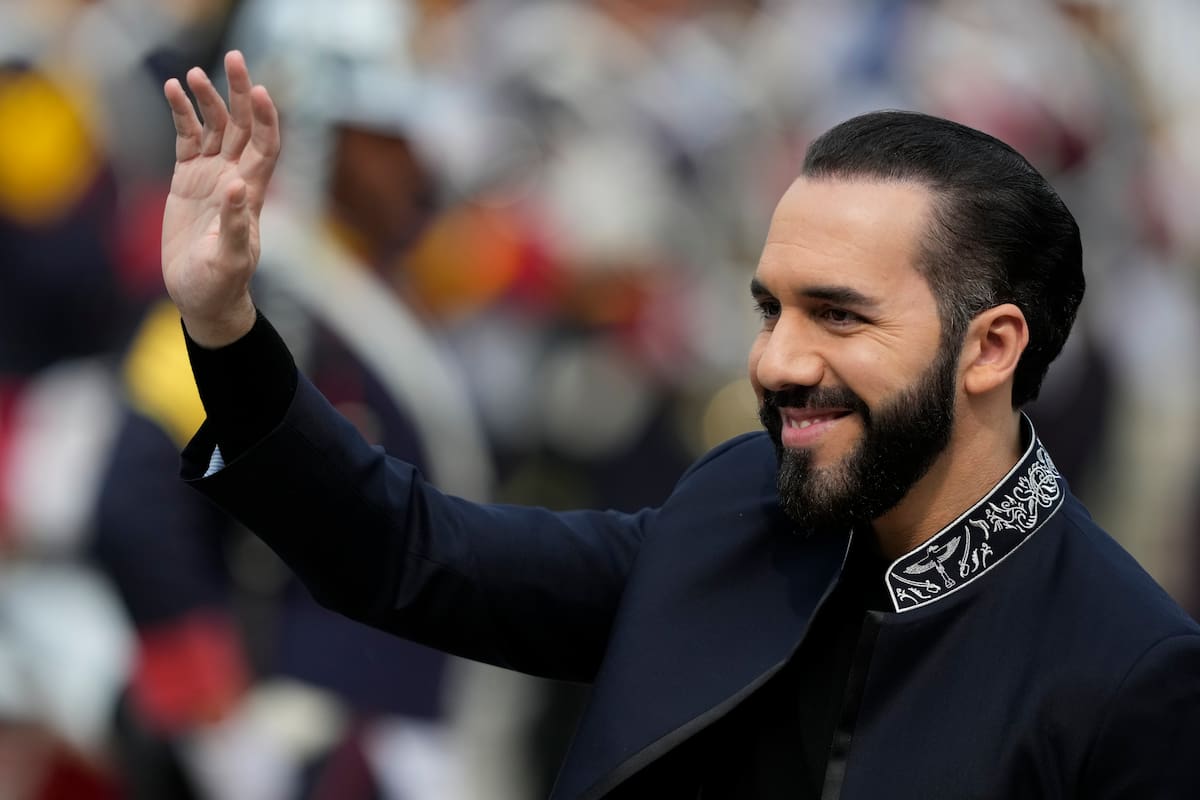
Some supporters waved Salvadoran flags and displayed the name and image of President Nayib Bukele , expressing solidarity with El Salvador’s current involvement in efforts to combat criminal gangs in the Haitian capital, Port-au-Prince.
A chorus that continued to alternate between “Bwa Kale” and “Bukele” was accompanied by Rara Lakay’s music animation. At one point during the second half, security personnel escorted a supporter from a restricted area near the pitch after he displayed a sign reading, “Bukele frape yo” – Haitian Creole for “Bukele is cracking them down” or “Bukele hit them.”
In the end, the match’s occasion became a platform for Haitians to communicate with the world, bringing together their love of soccer, cultural pride and concerns about the country’s future.
On the field, Haiti initially gave its supporters reasons to believe the night might end differently.
The U.S. men’s national team opened the scoring in the 10th minute through Auston Trusty, who capitalized on a set-piece opportunity after Haiti failed to defend the situation effectively. But the Grenadiers responded with attacking intent.
In the 14th minute, midfielder Josué Casimir nearly equalized after breaking through the American defense on a counterattack. His shot was stopped by the U.S. goalkeeper Diego Kochen, who moved quickly to protect his right post.
The Haitian crowd saw a team that started to grow in the match like it was during its World Cup run. And the cheers went louder and louder. Fans remained engaged, responding to every promising attack with chants of “Haiti! Haiti! Haiti!” The Americans also had a second goal ruled offside before halftime, allowing Haiti to enter the break trailing by just one goal.
The atmosphere suggested that supporters still believed their team could find a way back.
But the second half brought a different story.
As Haiti pushed forward in search of an equalizer, the Americans exploited the spaces left behind. Teenager Julian Hall extended the lead in the 52nd minute before Christian Pulisic converted a penalty in the 62nd minute and bringing the score to 3-0. Pulisic scored again a minute later, and Weston McKennie added a fifth in the 68th minute.
At this point, several Haitian journalists in the press box resigned that the team was a shadow of what supporters saw during its World Cup run. It missed Jean Ricner Bellegarde, who sat out due to an injury, they said.
Besides missing a playmaker like Bellegarde, Haiti also lacked chemistry in defense. Two key central defenders, Hannes Delcroix and Garven Metusala, are recovering from injuries as well. Coach David Badia had to pair up two players, Patrick Dwadike and Kayden Pierre, who received their first cap with Les Grenadiers.
For a moment, however, the Haitian supporters thought they finally had a goal to celebrate.
In the 70th minute, Lenny Joseph appeared to score Haiti’s consolation goal, sending the crowd into an eruption of joy. But a video assistant referee (VAR) review ruled the goal offside, bringing the celebration to an abrupt halt.
The decision drew loud boos from the stands, where supporters had already expressed frustration with several calls against Haiti. Yet their encouragement of the players did not disappear. The chants continued, growing louder with every Haitian pass, tackle and attempt on goal.
American forward Folarin Balogun, who entered as a substitute, scored in the 82nd minute to complete the USMNT’s 6-0 victory.
The result left Haiti facing an almost insurmountable challenge ahead of Tuesday’s return leg in Cincinnati, Ohio. But the team’s supporters had already made their own statement in Miami.
Haiti head coach Badia defended his players after the match, explaining that the team had believed it could overturn the deficit after halftime but left too much space between its lines as it pushed forward.
“We are going to analyze what went wrong so that we can learn from our mistakes for the better in the future,” said Badia, who took over the team in August as Haiti began a new cycle following the 2026 World Cup.
The coach acknowledged the difficulty of playing a two-leg series against a strong opponent like the U.S.—16th in the world in the latest FIFA rankings —suggesting that a single match might have been a better format.
But for the thousands who came to support Haiti, the night was not simply about what happened during the 90 minutes.
They had traveled from different places, filled the stadium in their national colors, raised their voices and kept celebrating long after the result was settled. Their message to the players was unmistakable: the support does not disappear when the goals stop coming.
In a night when the scoreboard belonged entirely to the United States, Haitian supporters made sure their country’s colors, music and spirit remained impossible to miss.
This report is a collaboration between The Haitian Times and The Associated Press.


