1

 1 minuto de lectura'
Late in Martin McDonagh’s new film “Wild Horse Nine,” John Malkovich’s CIA agent Chris describes an idea for a Western told from the point of view of the horse. It would be a “downbeat Western,” he tells his partner Lee (Sam Rockwell), who laughs: “There’s no way I’m seeing that Western.”
It’s McDonagh’s self-conscious nod to the fact that he is wrapping up his own downbeat Western, a darkly comedic and mournful tale of regret and atonement at the end of a life of violence. After a career devoted to killing and regime-toppling for the U.S. government, Chris is staring down his own death for a decidedly less cinematic reason — cancer — and his thoughts are scattering. For Lee, as he listens to Chris’ nonstop chatter, it has become difficult to distinguish between the nonsense and the truths.
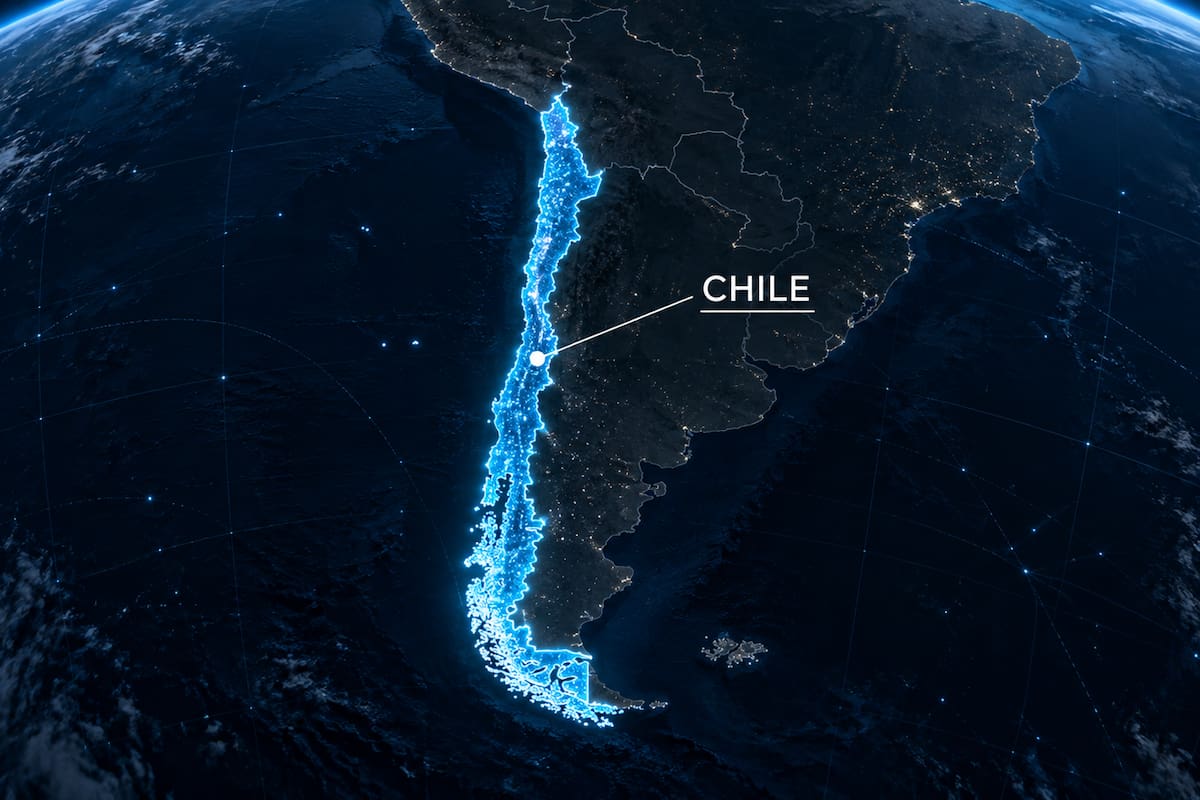
The two men are on a trip to Easter Island. It’s 1973, they’re stationed in Santiago, Chile, and they know the dark future awaiting their adopted home: On Sept. 11, Gen. Augusto Pinochet will lead a violent military coup, seizing power from and killing the democratically elected president, Salvador Allende. This is business as usual for Lee and Chris, but Chris has been getting a little loose-lipped lately.
“Enjoy him while you can,” Chris tells two young Allende fans, Monica (Mariana di Girolamo) and Alicia (Ailín Salas), at the airport. He also says they are indeed in the CIA and in Chile to destabilize the government, which Lee attempts to play off as a joke. But, for now, they’re off to see “the big heads.”
There is something sinister looming over this vacation, however, and it’s not just the upcoming coup. One way or another, Chris is not likely to make it off Easter Island alive. Their boss, MJ (a cranky and amusing Steve Buscemi), knows about Chris’ plans to write a memoir and has tasked Lee with finding out what’s in it. They are particularly concerned about any information regarding a certain presidential assassination in Dallas in 1963. And soon after they get off the plane, MJ is already aware of the airport gaffe; someone is watching Lee watch Chris and reporting back.
This is familiar territory for McDonagh, who continues to be drawn into the realm of male friendships and heightened scenarios in picturesque locations, from “In Bruges” through “The Banshees of Inisherin. ” Lee and Chris’ conversations mostly consist of bickering, but the layers of this oddball coupling begin to shed and reveal something substantial and deep.
McDonagh’s writing is, as ever, acerbic and arch. These are not necessarily men you’d want to befriend. They are hostile and rude to nearly everyone around them, especially fellow tourists who are quick to correct them about the proper names for Easter Island (Rapa Nui) and the big heads (moai). They are the quintessential ugly Americans, who mock the use of words like “indigenous,” which seems more like McDonagh cynically poking at modern liberal usage rather than a sincere effort to construct good dialogue.
But this is also a recurring trapping for McDonagh (remember the “Three Billboards” backlash?), who does have some more effective and memorable scenes up his sleeve, such as one in which Chris explains the correlation between good cheeses and “gay countries.” He also breaks things up with songs and landscapes. The needle drops might be a little on the nose sometimes, from Chris’ fondness for “I’m So Lonesome I Could Cry” (“like me, he’s lost the will to live”) to “Both Sides Now.” But that doesn't mean they're not also considered and additive.
In many ways, it’s the actors who elevate even the clunkers to something profound and compelling. Few filmmakers let Rockwell shine like McDonagh. Lee is carrying more than the weight of the imminent loss of his friend, recognizing his own complicity in a corrupt system void of decency toward anyone, including his family. Parker Posey puts a very funny spin on the wife-on-the-phone trope: Her Marge is often drunk, a serial cheater and quick with an insult.
Malkovich, meanwhile, is doing something that feels fundamentally new. He performs Chris like he’s in a waking dream, floating in a disorienting void between life and death, opining about moths and horses and Catholicism. Some of it is the morphine, sure, but some of the thoughts are sober ones. And when things start to get too poetic or precious, there’s always an F-bomb waiting in the wings.
There is little salvation to be found for Chris and Lee on Easter Island. State-sanctioned violence has infected everything and there’s no way to turn it around. And yet even in a world drowning in cynicism and ugliness, McDonagh finds beauty and grace in youth and nature.
“Wild Horse Nine” might not stray too far from the formula, but at least it’s McDonagh’s own formula. He's quite good at replaying the hits.
“Wild Horse Nine,” a Searchlight Pictures release in theaters Friday, is rated R by the Motion Picture Association for “sexual references, pervasive language, drug use and some strong violence.” Running time: 118 minutes. Three stars out of four.