1

 1 minuto de lectura'
BELGRADE, Serbia (AP) — A grassroots, youth-led movement that won Serbia's election last month will take up parliamentary seats this week along with a chance to deliver a promised system overhaul. They will encounter an entrenched legacy of an established, long-ruling party.
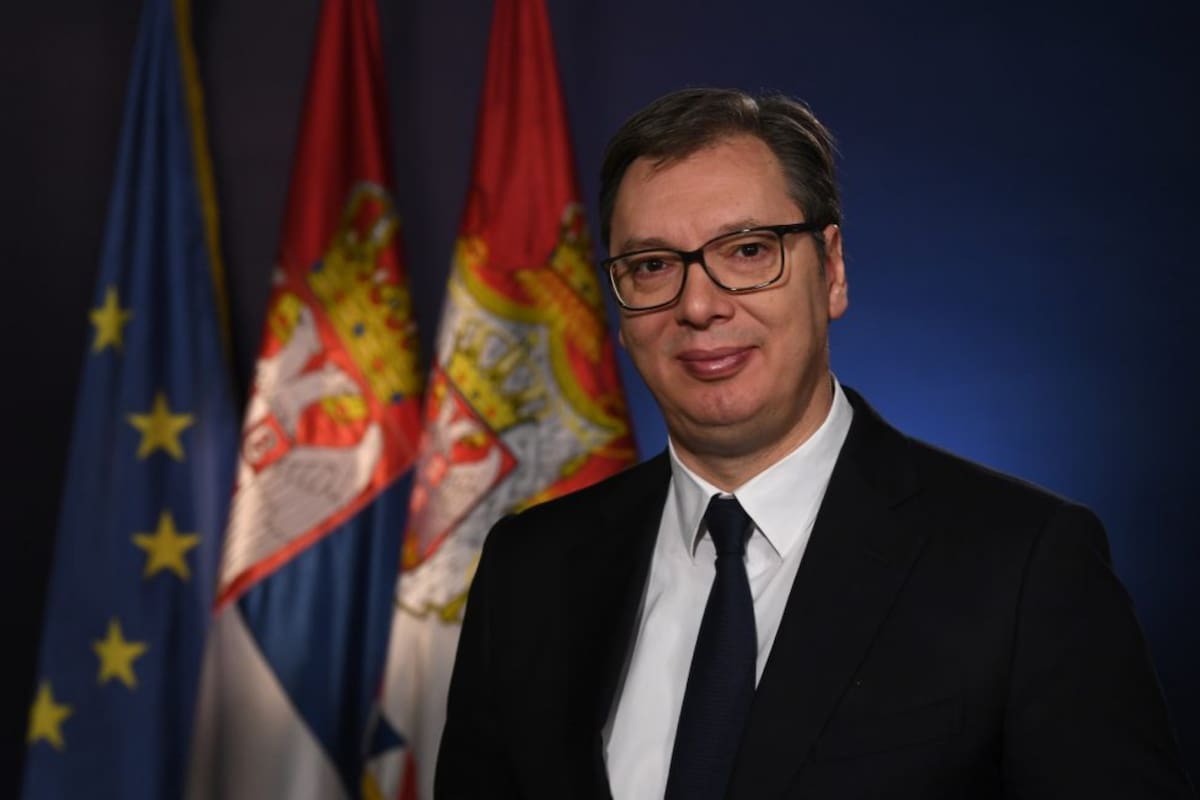
The Students' List group on Oct. 25 defeated former strongman Aleksandar Vucic 's right-wing Serbian Progressive Party in the early parliamentary vote that came after two years of anti-corruption protests in the Balkan country. The inaugural assembly session on Tuesday will mark the first step toward the formation of their future government.
Students have promised to restore democracy and the rule of law, and to terminate deeply-rooted corruption , cronyism and alleged organized crime links that they say thrived under Vucic. They will have a tough job, observers say, that leaves little room for mistakes.
“To be honest, I do not envy them at all,” said Zarko Korac, who was a deputy prime minister in Serbia's first democratically elected government after the ouster of former strongman Slobodan Milosevic in 2000. The new authorities, Korac said, “will face huge problems.”
“I hope they will manage because it will be bad for all of us if they don't,” he told The Associated Press.
The Students' List group will have 140 lawmakers in the 250-member Parliament. They are mostly professors, teachers and varied experts with respectable careers in their fields but with little or no political experience.
“They will start from scratch in both the Parliament and the government," Korac said. He believes that the lack of experience could be both “an advantage and a downside” in reforming the highly politicized state administration, security system and public companies.
The new authorities, he said, will have to “go into each and every institution, one after another, and make the changes."
At the session on Tuesday, lawmakers will start by choosing a parliament speaker and his or her deputy speakers, as well as various parliamentary bodies. A new government then must be voted into office within 90 days.
Vucic will be one of the 103 opposition lawmakers from his SNS party. They are all well-experienced and versed in parliamentary struggle and verbal exchanges. The SNS is notorious for harsh language and insults against political opponents. Vucic promised his lawmakers will be “decent and civilized.”
While making clear their focus is at home, student representatives already have made first international contacts.
A Students' List delegation earlier this month met with European Union officials, and last week with both the U.S. Assistant Secretary of State for European and Eurasian Affairs Brendan Hanrahan and the Russian ambassador in Serbia Alexander Botsan-Kharchenko.
Serbia's future government is not expected to tackle key foreign relations immediately — the Balkan country is seeking EU entry but has not joined sanctions against Moscow, and depends on Russia for energy. Vucic also developed close economic and political relations with China.
After the talks in Brussels, EU Enlargement Commissioner Marta Kos said that “we are ready to help the new government to really do all the necessary reforms in the field of the rule of law.”
The U.S. “stands ready to continue working with Serbia and the Serbian people toward our shared goals, including regional security and economic cooperation," Hanrahan said on X last week.
Separately, the U.S. Bureau of International Narcotics and Law Enforcement Affairs said it joined the meeting with the student movement, “whose efforts to combat organized crime complement INL’s ongoing work in Serbia.”
Korac, whose post-Milosevic government in 2000 inherited a war-ravaged nation that was bombed by NATO a year earlier, said both then and now the systems were shaped to suit those in power rather than the citizens.
Led by Prime Minister Zoran Djindjic, the post-Milosevic government ended Serbia's international isolation and restarted the economy. But the fragile democracy barely took hold before the ruling coalition split, and Djindjic was assassinated in 2003 by the state security's ex-paramilitary fighters.
More than two decades later, Serbia's EU bid has stalled over democratic backsliding under Vucic, who imposed full control over all layers of power after his party took office in 2012.
Korac joined mounting calls for the dismantling of the state spy agency as a key reform step, after it was accused of widespread surveillance of Vucic's critics and opponents.
The Security Information Agency, or BIA, has denied wrongdoing, describing the accusations of wiretapping and phone spyware as “malicious” and designed to fuel instability.
Allegedly monitored have been the Belgrade University rector, students and their faculty premises, an opposition politician, the newsroom and journalists of the Radar weekly — including their homes and cars — activists and analysts.
A surge in post-election arrests included officials, police officers and a private bank owner who allegedly attempted to siphon off money.
Vucic has accused the students of a “revolutionary terror” in daily appearances on loyal media and social networks. Vucic suggested his party may sit out an upcoming early presidential election to avoid “creating an illusion” that things are normal.
Such rhetoric will continue, Korac predicted, expressing hope that the new authorities will include "people with strong nerves.”
The students, he said, have shown during the two years of anti-corruption protests that they are strong: “That strength is distinctive for young people and I do hope they'll preserve it."